Pilates Shakes: A Neurological and Biomechanical Explanation
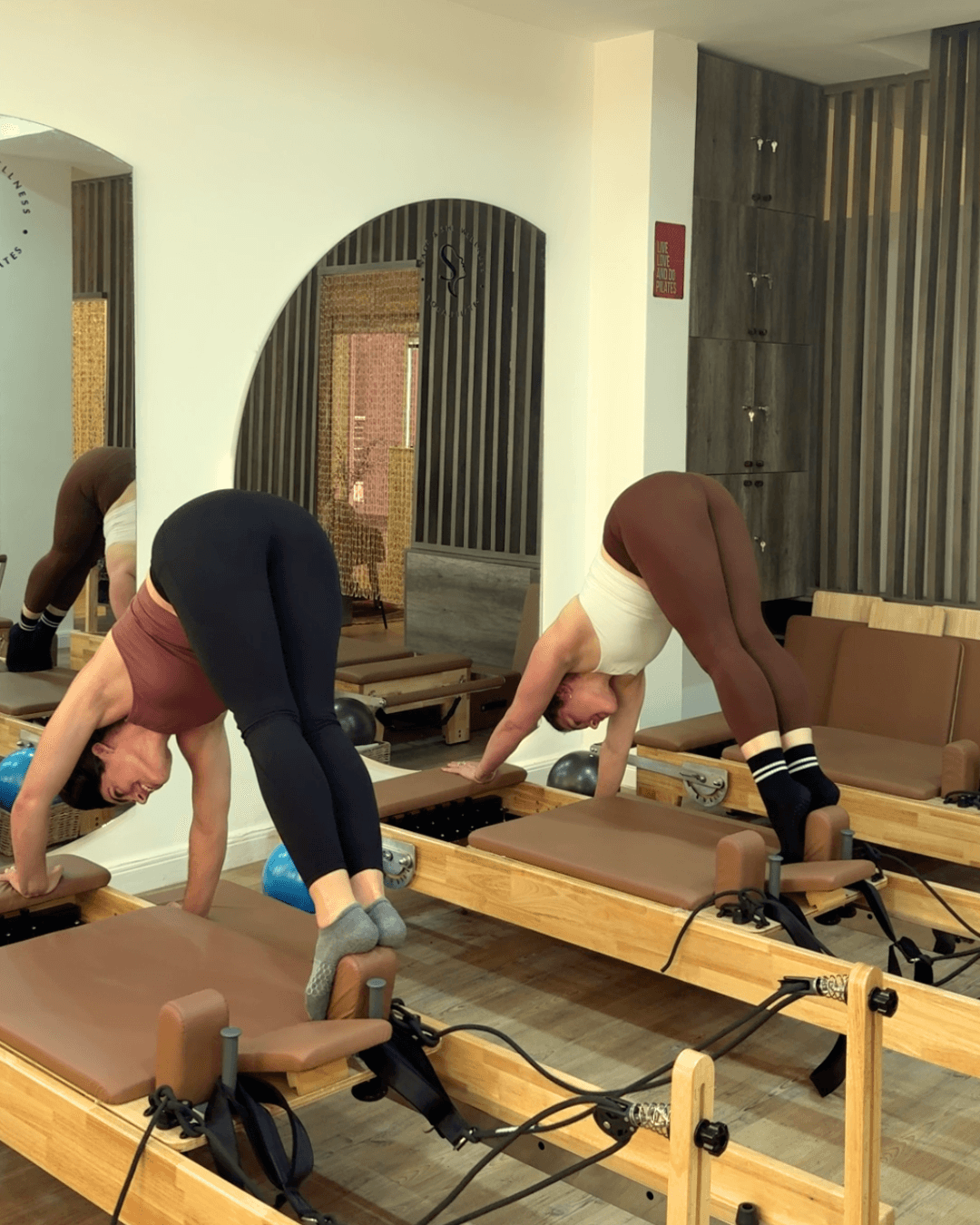
If you’ve ever been in a Pilates class especially chair, reformer, or slow mat work
and felt your muscles start to shake, you might have wondered: Am I weak? Is this
bad? Should I stop?
Short answer: no.
Longer answer: those shakes are actually a conversation between your muscles
and your nervous system.
From a neurology and kinesiology perspective, Pilates shaking is information, a
measurable response to how the nervous system manages precision, load, and
fatigue under controlled conditions.
Neuromuscular Control and Motor Unit Recruitment
Skeletal muscle force is generated through motor units, each consisting of a
motor neuron and the muscle fibers it innervates. When a task requires fine
control rather than maximal force, the nervous system increases motor unit firing
frequency and synchronization, rather than simply recruiting large, fast-twitch
fibers.
What does this mean? Big Muscles force; small muscles precision
During slow, controlled holds (for example, supine leg work with your feet
supported on a chair or pedal), your nervous system must:
- Maintain joint alignment
- Stabilize multiple segments simultaneously
- Continuously adjust force output based on sensory feedback
Shaking emerges when motor units are firing rapidly but inconsistently as the
system works to maintain precision. This is especially visible when stabilizing
muscles, rather than prime movers, are the primary contributors.
What are stabilizing muscles?
Proprioception, Balance, and Sensory Load
Pilates places unusually high demands on proprioception which is the body’s
ability to sense position, movement, and force. Supported exercises reduce gross
movement while increasing sensory resolution. This shifts the workload from
momentum-based muscles to joint stabilizers and postural control systems.
Key contributors include:
- Muscle spindles (detect stretch and rate of change)
- Golgi tendon organs (monitor tension)
- Joint mechanoreceptors (provide positional feedback)
When these systems are highly active, especially in unfamiliar ranges or patterns,
the central nervous system increases corrective output. Shaking reflects real-time
micro-adjustments.
This is why shaking is common in positions that look simple but require sustained
control; such as lying down with limbs elevated and externally supported.
Local Muscular Fatigue vs. Global Exhaustion
From a kinesiology perspective, Pilates shaking is usually a sign of localized
muscular fatigue, not cardiovascular or systemic fatigue.
Pilates emphasizes:
- Isometric contractions
- Slow eccentric loading
- Long lever arms with minimal momentum
These conditions fatigue Type I (slow-twitch) fibers and deep stabilizers quickly.
As these fibers fatigue, the nervous system recruits additional motor units to
maintain the task, increasing variability in force output; again, visible as shaking.
Why Shaking Is Common in Chair and Supported Pilates
Chair Pilates and supported mat work often reduce external load while increasing
neurological demand. By stabilizing the environment, the exercise removes
compensatory strategies and forces the nervous system to rely on:
- Segmental spinal control
- Pelvic and hip stability
- Fine motor coordination
This makes supported Pilates particularly effective as well as challenging for:
- Injury recovery phases
- Reduced weight-bearing capacity
- Individuals returning to movement after prolonged rest
- Nervous system retraining following pain or inactivity
When Shaking Is Adaptive vs. When to Modify
Adaptive shaking:
- Resolves with rest
- Occurs without pain
- Does not compromise breathing
- Improves with practice over time
Non-adaptive responses include:
- Sharp or joint-specific pain
- Breath holding or bracing
- Loss of coordination or dizziness
Clinical Takeaway
Pilates shaking is best understood as a neurological signal of learning,
stabilization, and controlled fatigue. It reflects how the nervous system organizes
movement under precision demands.
Rather than being something to eliminate, shaking provides valuable feedback.
In this sense, Pilates trains coordination, sensory awareness, and efficient force
distribution, which are foundational to both rehabilitation and long-term
movement health.